

In this article
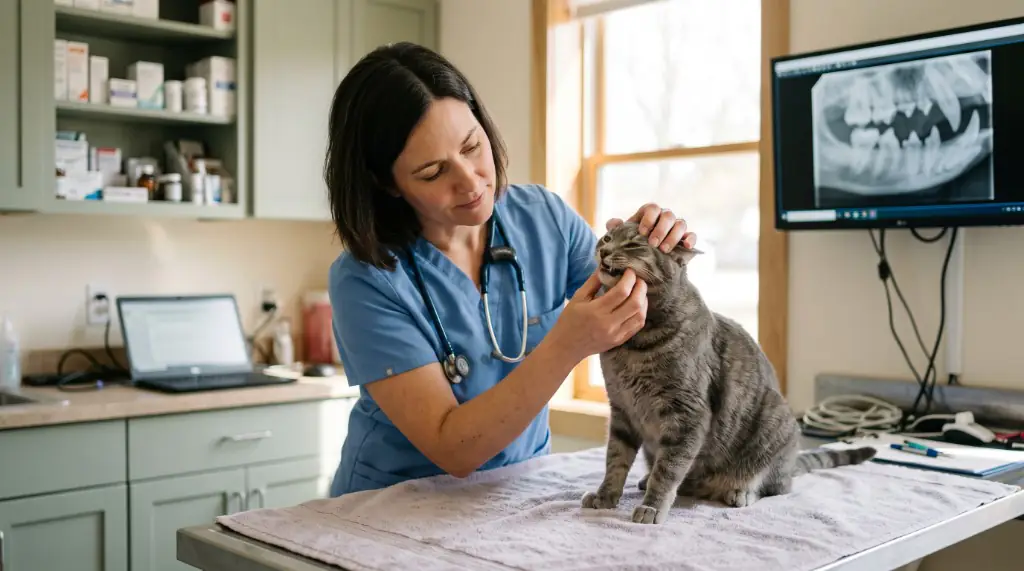
A cat who still eats, purrs, and sits in your lap can already need feline dental care. Bad breath, a slow switch to soft food, or a pink spot at the gumline are easy to miss because cats hide mouth pain. At Liberty Animal Hospital, a [veterinarian near me in Salem](/) can look past that quiet appetite and tell you whether a cleaning under anesthesia is the right next step. This guide covers what feline dental care includes, how gingivitis differs from tooth resorption, what helps at home, and how to book in South Salem.
What Is Feline Dental Care?
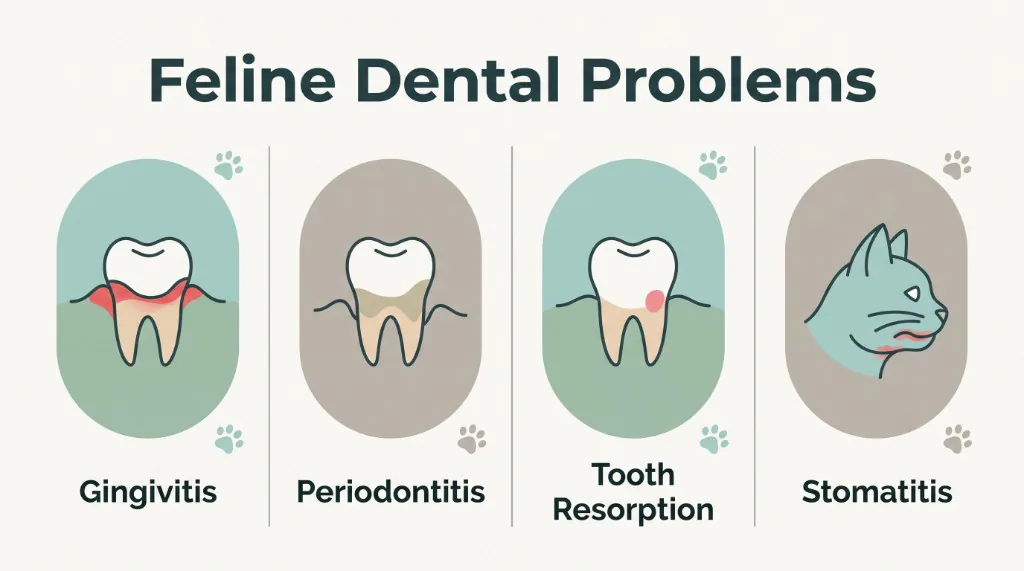
Feline dental care is the mix of awake mouth exams, professional cleaning under anesthesia, and home care that finds gum disease and tooth damage cats rarely advertise. It is oral medicine, not a polish of the teeth you can see. The Cornell Feline Health Center reports that studies find some form of dental disease in between 50 and 90 percent of cats older than four years. Cornell names three common problems: gingivitis, periodontitis, and tooth resorption. A cat can keep eating through all three. Appetite is not a clean bill of health.
At our South Salem clinic, feline dental care near me means an oral exam first, then a scheduled cleaning with ultrasonic scaling and polishing under monitored anesthesia when the mouth needs more than home care. Dr. Kolby Virgin evaluates the teeth during preventative care visits and recommends a procedure when tartar, red gums, or a damaged tooth say brushing will not be enough. Radiographs can change the estimate, and we try to call before extra steps.
What feline dental care can and cannot do
Feline dental care can clear plaque and tartar that inflame the gums, and it can find teeth that are resorbing, loose, or losing bone. It cannot rebuild attachment that periodontitis has already destroyed, and it cannot stop tooth resorption with brushing alone. Cornell notes there is little evidence that antibiotics by themselves fix gingivitis. The useful work is removing the plaque, and sometimes removing the tooth that is driving the pain.
- It can reverse gingivitis when plaque is cleared and home care continues, if the gums are not yet severely inflamed.
- It can find tooth resorption and bone loss that an awake peek misses.
- It can include extraction when a tooth is too damaged to leave in comfortably.
- It cannot treat the mouth safely while a cat is awake and moving.
- It cannot promise a price, or how many teeth will be removed, before probing and radiographs.
- It does not cover a whole-body disease by itself. Gingivitis tied to kidney disease, diabetes, or a viral infection needs that illness addressed too.
What Feline Dental Care Treats
Feline dental care treats gum inflammation, the bone loss that follows it, and a cat-specific breakdown of the tooth called resorption. Cornell describes gingivitis as red, swollen, painful gums, usually from plaque. In a healthy mouth the bacteria in plaque sit above the gumline. If plaque is not removed, it migrates under the gum, the immune system reacts, and the gum becomes inflamed. Tartar, the hard crust, gives those bacteria a rough surface to hold. Cornell is clear that the crust itself is not the main trigger. The bacteria on it are. Some cats mount a strong response and get obvious gingivitis. Others seem to tolerate the same film for longer. That is why two cats in one house can look completely different.
Gingivitis
Gingivitis is inflammation where the gum meets the tooth, and it is the stage feline dental care can often still turn around. Cornell says feline gingivitis is usually reversible. Treatment depends on how sore the mouth is and on the cause. It may mean a professional cleaning under anesthesia, home care once the mouth is comfortable, and, in severe inflammation, removing teeth that keep the gums angry. Brushing a severely inflamed mouth hurts, so do not start a new brushing routine until we have looked. Human toothpaste is not safe for cats. Cornell notes that human dental products can be toxic.
Gingivitis in cats can also come from whole-body disease, including feline leukemia virus, feline immunodeficiency virus, calicivirus, severe kidney disease, or diabetes. When the pink lining of the mouth is inflamed beyond a thin red line at the gum, veterinarians call it stomatitis. That is a different problem from ordinary gingivitis, and it needs its own plan. An oral exam is how we tell them apart. Treating only the teeth, and ignoring the illness behind them, does not settle gingivitis that started somewhere else.
Periodontitis
Periodontitis is what follows when gingivitis is not controlled, and the tissues that hold the tooth are weakened. Cornell says this stage eventually cannot be reversed. You may see gum recession, exposed roots, and teeth that move. Cats may drool, tilt the head while chewing, prefer soft food, or develop bad breath. A full evaluation means probing the gums and taking dental radiographs, which requires anesthesia. Treatment aims to scale and polish and to save teeth where that is realistic. In advanced disease, extraction of several teeth may be what lets the mouth heal. Cornell notes that dental pain can make a cat stop eating, so a return of interest in food is one sign the mouth is more comfortable.
Tooth resorption
Tooth resorption is a breakdown of tooth structure that often starts inside the tooth and can reach the crown, and it is a central reason feline dental care includes radiographs. Cornell calls it the most common cause of tooth loss in cats, and reports that between 30 and 70 percent of cats show some sign of it. The cause is not known. It may or may not sit next to gingivitis. The first clue is often a pink spot where the tooth meets the gum. By the time that spot is visible, the tooth is already significantly damaged. Resorption can be very painful. Cats may refuse food, drool, chew with the head turned, or become irritable when the face is touched. Diagnosis takes an anesthetized exam, careful probing, and radiographs. When the lesion reaches the crown and the cat is uncomfortable, removing the tooth is usually the right path. If the damage is deep, taking out every root fragment can be difficult, and the plan depends on what the films show. We explain that before extra steps when we can reach you.
When to Arrange Feline Dental Care
Arrange feline dental care when the clues are small, because cats rarely stage a dramatic protest. Cornell lists hesitating to eat, turning the head while chewing, stopping eating, drooling, bad breath, and a preference for soft food. Add a pink spot at the gumline, bleeding when you lift a lip, or a cat who pulls away from a chin scratch that used to be welcome. The American Animal Hospital Association notes that by age three, most cats already have some form of periodontal disease, and that more than half of each tooth sits below the gumline where only radiographs can see it. Waiting for a skipped meal means waiting until disease is often advanced.
Call the same day if your cat's face swells, the mouth bleeds and will not stop, or your cat will not eat. If your cat cannot wait for an appointment, go to an emergency hospital. The one we direct clients to is WilVet Salem Emergency, (503) 741-8858.
- Bad breath that you notice when your cat is close
- Red, swollen, or bleeding gums
- A pink spot on a tooth at the gumline
- Drooling, or chewing with the head turned
- A switch to soft food, or food left behind
- Pulling away when you touch the face
- It has been more than a year since an oral exam
How Feline Dental Care Works
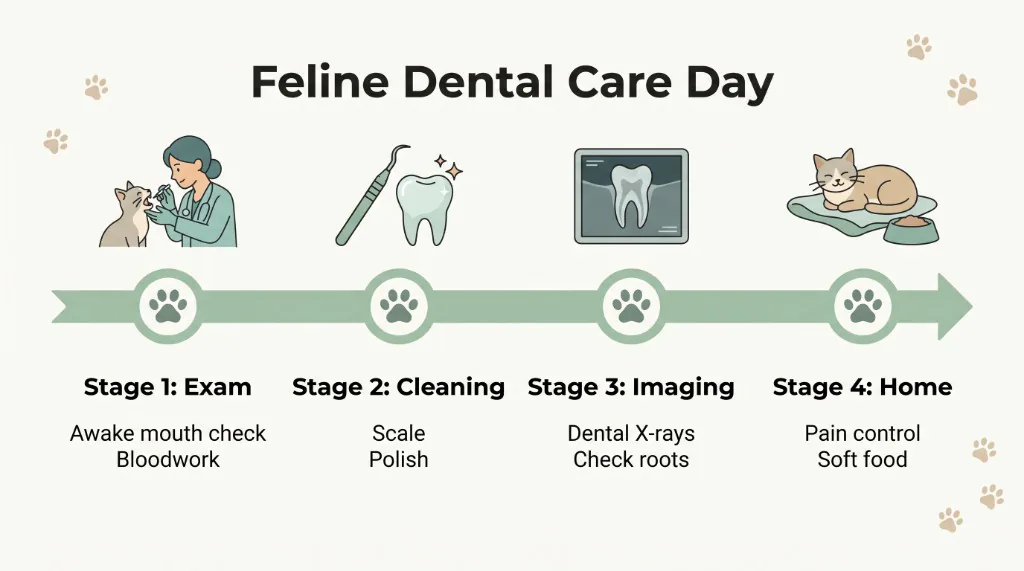
Feline dental care at the clinic works as a planned day: an exam and an estimate first, then anesthesia, cleaning above and below the gumline, radiographs when roots or the inside of a tooth need a look, and removal of teeth that cannot be saved. If you are unsure whether a spot is stain or resorption, the exam is the right first step. If you have already read our guide on choosing a vet near me in Salem, you know a shorter drive makes rechecks easier to keep. Cats who dislike the carrier still need that follow-up, so the clinic you can actually reach matters.
Before the procedure
Before the procedure, we examine the awake mouth as far as your cat allows, talk through what we expect, and recommend pre-anesthetic bloodwork. Our in-house laboratory can run many of those tests here. You get fasting instructions when you schedule. If your cat eats overnight or seems ill that morning, call. We would rather move the day than anesthetize an unwell patient. No anesthesia is risk-free. Screening and monitoring lower that risk. Age alone is not a reason to skip needed care or to rush it. Seniors, cats with heart or kidney disease, and flat-faced breeds need a more careful plan. If today is not a safe day, we postpone or refer.
During the procedure
During the procedure, your cat is anesthetized so we can scale above and below the gumline, polish, chart each tooth, and take dental radiographs when roots, bone, or a resorptive lesion need a closer look. The 2019 AAHA Dental Care Guidelines put a normal gum pocket at about one millimeter in a midsized cat, which is shallower than in a midsized dog, so small changes matter. We try to reach you before extra steps you were not expecting, such as extractions. Pain control is planned from the start. We track heart rate, oxygen, and temperature through the procedure. The American Veterinary Dental College states that scraping visible tartar off an awake animal is not a real dental procedure and is not effective prevention.
After you pick up
After you pick up, most cats go home the same day when recovery is going as expected, with written instructions, a soft-food plan, and pain management for the mouth. Medicine from our pharmacy may include pain control and, when we prescribe it, treatment for infection. Cornell notes that antibiotics alone are a weak answer to gingivitis, so they are not a substitute for cleaning or for removing a painful tooth. Offer water, keep meals soft for the period we specify, and skip hard treats until we say the mouth is ready. Call if your cat will not eat in the window we described, if swelling worsens, or if bleeding continues. Never give a human pain medicine. Many of them are toxic to cats.
Feline Dental Care at Home
Feline dental care at home is daily plaque control once the mouth is comfortable enough to touch, and Cornell calls brushing the most reliable way to prevent the common forms of dental disease. Use a toothbrush made for cats and toothpaste made for cats. Brush the outer surfaces. Cornell notes that the tongue already cleans the inner surfaces well. Many cats need a slow introduction: let them lick the toothpaste, then touch a canine tooth with a dab, then the brush, then a gentle pass along the gumline. Reward the session. If the gums are already severely red, wait until we have treated the pain. Brushing through that soreness can make the next try harder.
Dental diets, water additives, and chews can help between brushings. They do not replace a professional cleaning once tartar and gum disease are in place. The American Animal Hospital Association points owners toward products with the Veterinary Oral Health Council seal, and we will tell you which of those make sense for your cat. A cat who only eats wet food is not protected from plaque. Wet food can be the right choice for a sore mouth. It is not a dental program by itself.
Feline Dental Care Compared With an Awake Scrape
Feline dental care compared with an awake scrape is the difference between finding resorption and gum pockets, and wiping tartar off the crown you can already see.
| Criterion | Feline dental care | Awake tooth scrape |
|---|---|---|
| Where it cleans | Above and below the gumline | Visible crown only |
| Dental radiographs | Taken when roots or resorption need them | Cannot be done safely |
| What cats hide | Pain while still eating | Looks fine from the lip |
| What it can treat | Gingivitis, pockets, resorption | The look of the crown |
| What happens next | Home care once the mouth is comfortable | Disease continues underneath |
The American Veterinary Dental College states that anesthesia-free scraping does not prevent dental disease. A cat's teeth can look cleaner while a resorbing root or a deep pocket stays untouched. Fear of anesthesia is understandable, especially with an older cat. It deserves a conversation about screening. It does not make an awake scrape a safer version of feline dental care.
Booking Feline Dental Care in Salem
Booking feline dental care in Salem starts with an oral exam and an estimate, then a procedure day on our schedule. Call (503) 339-7065, or book an appointment online, and describe what you are seeing: breath, a pink spot, drooling, or a cat who suddenly wants only soft food. New clients should bring prior records. If your cat is frightened in the carrier, say so when you book so we can plan the visit around that. Most dental plans start at a wellness exam, not on a procedure morning you have to invent yourself.
We care for cats from Salem and South Salem, in the Sunnyslope Center. If your cat is in severe oral pain, the face is swollen, or they cannot eat, call and ask whether we can see them as pet urgent care near me or whether you should go straight to emergency care. For an emergency we cannot see, use WilVet Salem Emergency, (503) 741-8858. Do not wait on a swelling face or a cat who cannot swallow comfortably.
Dogs have their own pattern, especially small breeds and broken teeth. Our guide to canine dental care covers that.
Feline dental care is how we find the mouth pain your cat is too quiet to announce.
Frequently Asked Questions
How long does feline dental care at the clinic take?
Feline dental care at the clinic usually fills a procedure morning, and most cats go home the same day when recovery goes as expected. Anesthesia, radiographs, and extractions make a mouth with resorption or several diseased teeth take longer than a simple cleaning. We send fasting and drop-off instructions when you schedule. Call if your cat eats overnight or seems ill that morning so we can move the day. Pickup stays an estimate until the radiographs show which teeth can stay.
Does feline dental care hurt?
Feline dental care should not hurt during the procedure, because your cat is anesthetized and pain control starts before we scale. Soreness afterward is common if teeth were removed, and pain medication goes home for that reason. Do not give human pain tablets. Many are dangerous for cats. Soft food, rest, and the written instructions cover the first days. Call if your cat skips meals past the window we gave you, or if swelling or bleeding gets worse.
How much does feline dental care cost?
Feline dental care does not have one flat fee, because bloodwork, anesthesia time, radiographs, and extractions all change the total. Tooth resorption in particular can add teeth we could not fully judge while your cat was awake. We estimate after the exam and try to call before major added steps. An awake scrape is not a cheaper version of the same care. If budget is the worry, say so when you call so the estimate is part of the decision.
How often does a cat need feline dental care?
The American Animal Hospital Association says most pets need a professional cleaning about every one to two years, and some cats need one sooner. That interval follows the mouth, the cat's age, and risk, not a birthday. Figures from Cornell, with dental disease common after age four, are a reason to look early. Daily brushing can stretch the gap once the gums are comfortable. It cannot reverse resorption or remove tartar already under the gum. If the last oral exam was more than a year ago, start with a visit.
Can feline dental care be done without anesthesia?
Feline dental care without anesthesia only scrapes tartar you can already see and leaves disease under the gumline, including resorption, unmeasured. The American Veterinary Dental College states that this approach is not effective prevention and can injure the mouth. Anesthesia lets us protect the airway, probe each tooth, and take radiographs. It is not risk-free, which is why we screen first and postpone when today is not a safe day. A prettier crown can delay the extraction that would stop the pain.
Why does my cat still eat if feline dental care is needed?
A cat who still eats can still need feline dental care, because cats hide oral pain and often keep showing up for meals until disease is advanced. Cornell describes drooling, head tilting, and a switch to soft food as earlier clues than a skipped dinner. Bad breath and a pink spot at the gumline count too. Do not wait for an empty bowl. An exam tells gingivitis, periodontitis, and tooth resorption apart, and those three are not treated the same way.
When should I call about feline dental care in Salem?
Call about feline dental care in Salem when breath stays bad, gums look red, your cat drools, food is dropped, or a tooth has a pink spot at the gum. A year since the last oral exam is reason enough, even if your cat seems fine. Call (503) 339-7065. A swollen face, a cat who cannot eat, or bleeding that will not stop should not wait for a routine slot. Call the same day, or go to an emergency hospital.
Sources
- Cornell Feline Health Center, Feline Dental Disease
- American Animal Hospital Association, Your Pet's Dental Care (updated January 26, 2026)
- American Animal Hospital Association, 2019 AAHA Dental Care Guidelines for Dogs and Cats
- American Veterinary Dental College, Dental Scaling Without Anesthesia
Links checked October 18, 2026. This article is general information, not a diagnosis; call your veterinarian about your own pet.