
In this article
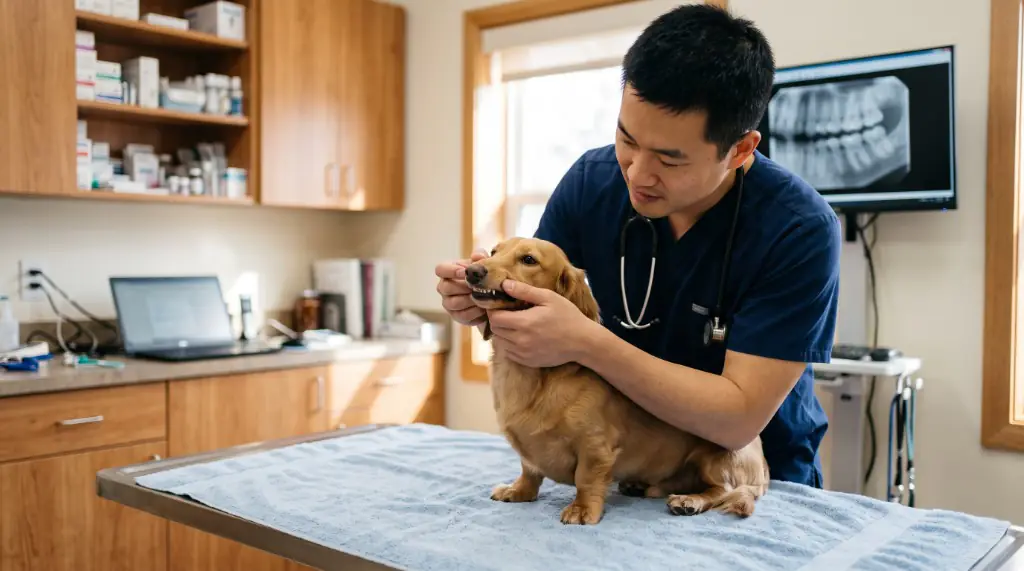
Bad breath you have started to excuse is often the first sign canine dental care is overdue. Plaque films the teeth, hardens into tartar, and the gumline turns red, while your dog still finishes dinner. At Liberty Animal Hospital, a [veterinarian near me in Salem](/) can check that mouth during a regular visit and tell you whether a cleaning under anesthesia is the right next step. This guide covers what canine dental care includes, how gum disease differs from a broken tooth, what helps at home, and how to book in South Salem.
What Is Canine Dental Care?
Canine dental care is the mix of awake mouth exams, professional cleaning under anesthesia, and daily home care that keeps plaque from quietly damaging a dog's teeth and gums. It is oral medicine, not a cosmetic polish. The Cornell Riney Canine Health Center reports that studies find some component of periodontal disease in 80 to 90 percent of dogs over three years old. It is worse in smaller breeds, and it becomes more common with age. Many dogs keep eating, greeting you, and playing while the real problem, plaque under the gumline, stays invisible on a quick look.
At our South Salem clinic, canine dental care near me means an oral exam first, then a scheduled cleaning with ultrasonic scaling and polishing under monitored anesthesia when the mouth needs more than brushing. Dr. Kolby Virgin evaluates the teeth during preventative care visits and recommends a procedure when tartar, red gums, or a damaged tooth say home care is no longer enough. You leave that visit with an estimate range. The range can change once radiographs show disease under the gum, and we try to call before those extra steps.
What canine dental care can and cannot do
Canine dental care can clear the bacterial film and tartar that inflame the gums, and it can reveal teeth that are loose, broken, or losing bone. It cannot rebuild attachment that periodontitis has already destroyed, and it cannot replace daily brushing afterward. Cornell notes that the bacterial population under the gum improves right after a professional cleaning, then rebounds within days if plaque is allowed to settle again.
- It can reverse gingivitis when plaque is removed above and below the gumline and home care continues.
- It can find bone loss and broken teeth that an awake peek underestimates.
- It can include extraction when a tooth is too diseased to leave in comfortably.
- It cannot treat the mouth safely while a dog is awake and moving.
- It cannot promise a price, or a number of teeth, before probing and radiographs.
- It does not include root canal therapy or caps. Those advanced repairs are a referral when they are the right choice.
What Canine Dental Care Treats
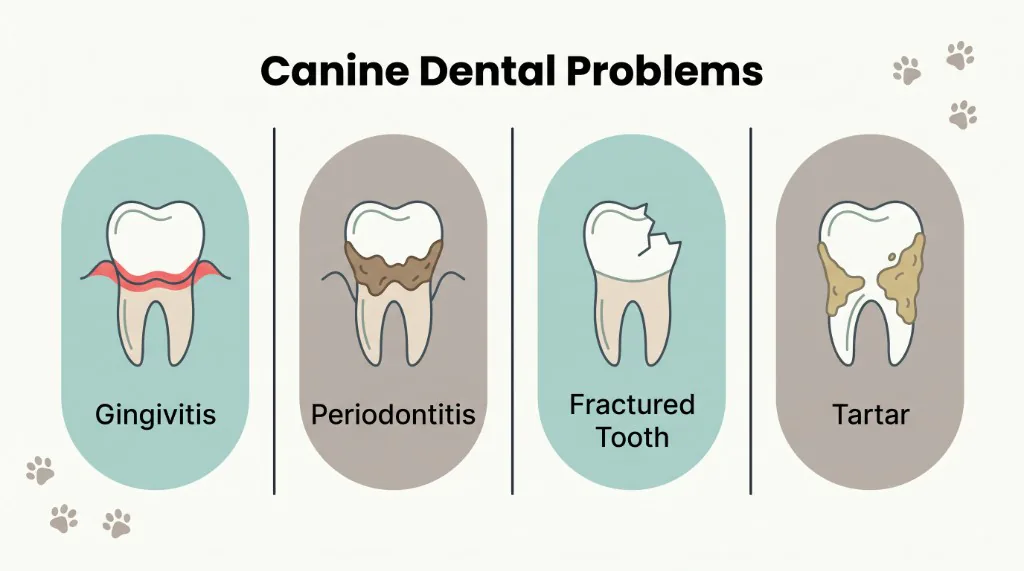
Canine dental care treats the infections and breaks that start with plaque or with something too hard to chew, chiefly periodontal disease and fractured teeth. Cornell's guide to dental disease and home care describes the sequence in plain steps. Plaque, a sticky bacterial film, can begin hardening into tartar in as short as 24 hours as minerals in saliva lock it onto the tooth. The bacteria inflame the gum, which is gingivitis. If that inflammation moves deeper, it becomes periodontitis: bone loss, and in time tooth loss. Tartar looks like the problem because it is yellow-brown and smells. Cornell is clear that plaque, especially under the gum, is the main driver. A white crown can still hide disease.
Gingivitis
Gingivitis is inflammation of the gums from bacterial plaque, and it is the stage of disease canine dental care can still turn around. The gum looks red, puffy, or shiny where it meets the tooth, and it may bleed when your dog chews a toy or when you lift a lip. Breath often changes around the same time. Cornell describes gingivitis as the step before bone is lost. Brushing a mouth that is already sore can make the next attempt harder, so ask us before you start a brushing habit on red, bleeding gums. Human toothpaste is not a substitute. Cornell notes that dogs swallow the detergents and fluoride people spit out.
Periodontitis
Periodontitis is the stage after gingivitis, when inflammation has damaged the ligament and bone around the tooth. You may see a longer-looking tooth, gum recession, or a tooth that wiggles. Cornell links this infection to pain even when a dog shows little of it, and notes a connection with liver and heart disease. A separate Cornell review of dental disease says bacteria from the mouth can enter the bloodstream and have been tied to changes in the kidneys, liver, and heart. Those links are a reason to treat the mouth. They are not a prediction that every dog with tartar will develop organ disease. When a large share of the root support is gone, extraction is often what stops the pain. Cornell puts it simply: once a hopeless tooth is gone, the inflammation can settle and healing can start.
Fractured teeth
A fractured tooth is a break that can expose the pulp, the living tissue with the nerve and blood supply, and canine dental care is how we tell a chip to watch from a tooth that needs treatment. The Cornell Riney Canine Health Center says broken teeth are common, often from chewing very hard objects, and sometimes from trauma such as a car strike. Many fractures are found on an oral exam with no story of the day it happened. A pulp exposure hurts. A dog may avoid cool water, skip hard biscuits, walk up to the bowl and leave, or stop using a favorite chew. A chronic break can abscess and swell the face. A chip that stays in enamel, with no dentin exposed, may be monitored. A loose tooth should not be watched and waited on, because bacteria can track toward the root. Cornell notes that most broken incisors are extracted, and that for many pet dogs extraction is the treatment chosen, depending on health and which tooth it is. Dental radiographs show whether the damage stops at the crown or runs down the root.
When to Arrange Canine Dental Care
Arrange canine dental care when the mouth is telling you something, even if your dog still eats. Cornell lists signs that usually mean disease is already further along than it looks: pawing at the mouth, drooling, meals that take longer, food carried away from the bowl and dropped, bad breath, bleeding, and a dog who gives up on a favorite chew. Swelling of the jaw or face, bloody nasal discharge, and a sudden drop in appetite belong on that list too. Smaller dogs need this look sooner and more often. Cornell reports periodontal disease is worse in smaller breeds and increases with age, and the awake exam at a yearly visit, or more often when breed and history say so, is where that gets caught.
Call the same day if your dog's face swells, the mouth bleeds and will not stop, or your dog will not eat. If your dog cannot wait for an appointment, go to an emergency hospital. The one we direct clients to is WilVet Salem Emergency, (503) 741-8858.
- Bad breath that no longer comes and goes
- Yellow or brown tartar, especially on the upper back teeth
- Red, puffy, or bleeding gums
- Dropping food, chewing on one side, or leaving the bowl
- A chipped, loose, or missing tooth
- Drooling, pawing at the mouth, or swelling of the face
- It has been more than a year since anyone examined the mouth with a plan
How Canine Dental Care Works
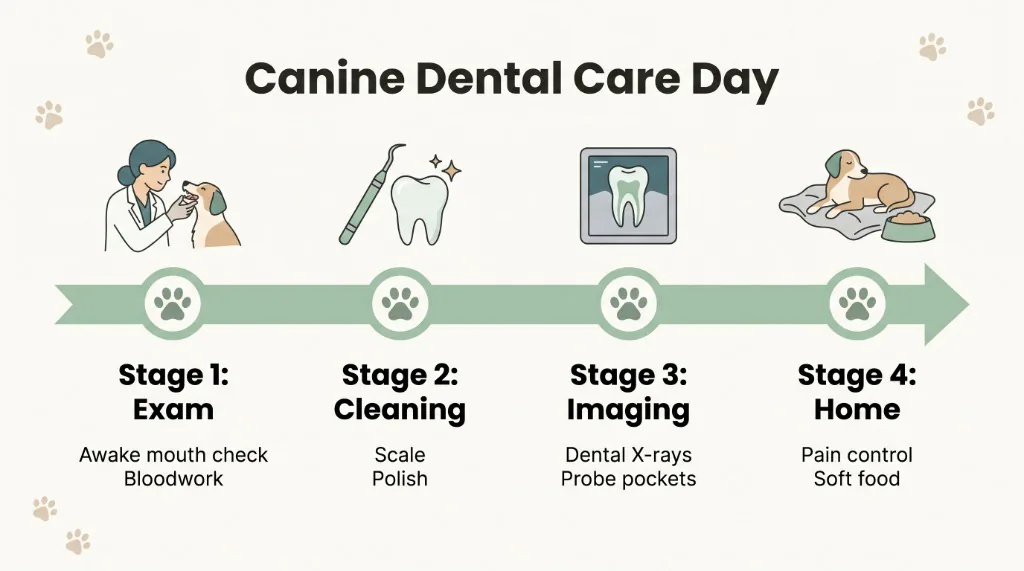
Canine dental care at the clinic works as a planned day: an exam and an estimate first, then anesthesia, cleaning above and below the gumline, radiographs when roots or bone need a closer look, and treatment of diseased teeth. If you are unsure whether you are seeing stain or disease, the exam is the right first step. You do not have to decide on extractions from a photograph. If you have already read our guide on choosing a vet near me in Salem, you know a short drive makes the recheck easier to keep. Dental care depends on that return visit.
Before the procedure
Before the procedure, we examine the awake mouth, talk through what we expect, and recommend pre-anesthetic bloodwork. Our in-house laboratory can run many of those tests here, so organ function is part of the decision. You get fasting instructions when you schedule. If your dog eats overnight or seems ill that morning, call. We would rather move the day than anesthetize an unwell patient. No anesthesia is risk-free. Screening and monitoring lower that risk. Age alone is not a reason to skip needed care or to rush it. Seniors, dogs with heart or kidney disease, and flat-faced breeds need a more careful plan. Cornell notes that a heart murmur is a reason for extra screening so the benefit outweighs the risk, not an automatic reason to leave a painful mouth untreated. If today is not a safe day, we postpone or refer.
During the procedure
During the procedure, your dog is anesthetized so we can scale above and below the gumline, polish, chart each tooth, and take dental radiographs when roots or bone need a closer look. Cornell describes why that stillness matters: a full oral exam, including radiographs, is how plaque and tartar under the gum are actually removed and how broken or loose teeth are judged. We try to reach you before extra steps you were not expecting, such as extractions. Pain control is planned from the start. We track heart rate, oxygen, and temperature through the procedure. The American Veterinary Dental College states that a complete cleaning, probing, and radiographs are not possible in an awake dog, and that scraping only the visible crown is not effective prevention.
After you pick up
After you pick up, most dogs go home the same day when recovery is going as expected, with written instructions, a soft-food plan, and pain management for the mouth. Medicine from our pharmacy may include pain control and, when we prescribe it, treatment for infection. Not every mouth needs an antibiotic afterward. Skip hard chews until we say the mouth is ready. Call if your dog will not eat in the window we described, if swelling worsens, or if bleeding continues. Never give a human pain medicine. Many of them are toxic to dogs.
Canine Dental Care at Home
Canine dental care at home is the daily work that keeps plaque from returning under the gum, and brushing is the piece Cornell calls most effective. Use a soft brush and toothpaste made for dogs. The paste is meant to be brushed on and left, not rinsed, because dogs swallow what is in the mouth. Start when you can, ideally once the adult teeth are in, with a short session and a reward. Lift the lip and brush the outer surfaces. If your dog will not tolerate a brush yet, a finger along the gums with a dab of pet toothpaste is a fair starting point. Ask us before you brush a mouth that is already bleeding or painful.
Dental diets, water additives, and chews can help between brushings. They do not replace a professional cleaning once tartar and gum disease are established, and they do not replace brushing. Cornell points owners to products with the Veterinary Oral Health Council seal, and we will tell you which of those are worth buying. Chewing itself matters, and the wrong object breaks teeth. Cornell describes a simple thumbnail test used by many veterinary dentists: if you cannot dent the chew with a fingernail, it is too hard. Skip antlers, hooves, bones, and ice your dog crunches. A monthly brush at the groomer is not a daily program. Cornell is blunt about that myth. Plaque is a daily film.
Canine Dental Care Compared With an Awake Scrape
Canine dental care compared with an awake scrape is the difference between treating plaque under the gumline and polishing the crown you can already see.
| Criterion | Canine dental care | Awake tooth scrape |
|---|---|---|
| Where it cleans | Above and below the gumline | Visible crown only |
| Dental radiographs | Taken when roots or bone need them | Cannot be done safely |
| Airway and pain | Asleep, airway protected, pain planned | Awake, with injury risk |
| What it can treat | Gingivitis, pockets, broken teeth | The look of the crown |
| What happens next | Home brushing slows new plaque | Disease continues underneath |
The American Veterinary Dental College states that anesthesia-free scraping is not a replacement for a full dental procedure. Tartar lifted off the crown has little effect on the health of the tooth. The teeth can look whiter while periodontal disease keeps working. Fear of anesthesia deserves a direct conversation about your dog's health. It does not make an awake scrape the safer form of canine dental care.
Booking Canine Dental Care in Salem
Booking canine dental care in Salem starts with an oral exam and an estimate, then a procedure day on our schedule. Call (503) 339-7065, or book an appointment online, and describe what you are seeing: breath, tartar, dropped kibble, or a tooth that looks chipped. New clients should bring prior records so we are not guessing at the last cleaning. Most visits begin as part of a wellness exam. From there you get a plan you can accept or decline before any procedure day.
We care for dogs from Salem and South Salem, in the Sunnyslope Center. If your dog is in severe oral pain, the face is swollen, or they cannot eat, call and ask whether we can see them as pet urgent care near me or whether you should go straight to emergency care. For an emergency we cannot see, use WilVet Salem Emergency, (503) 741-8858. Do not wait on a swelling face or a dog who cannot swallow comfortably.
Cats hide mouth pain differently. Our guide to feline dental care covers gingivitis and tooth resorption.
Canine dental care is how we stop a quiet mouth infection before your dog has to show you it hurts.
Frequently Asked Questions
How long does canine dental care at the clinic take?
Canine dental care at the clinic usually fills a procedure morning, and most dogs go home the same day when recovery goes as expected. Anesthesia, radiographs, and extractions make a diseased mouth take longer than a simple scale and polish. We send fasting and drop-off instructions when you schedule. Call if your dog eats overnight or seems ill that morning so we can move the day. Pickup stays an estimate until the radiographs show what the mouth actually needs.
Does canine dental care hurt?
Canine dental care should not hurt during the procedure, because your dog is anesthetized and pain control starts before we scale. Soreness afterward is common if teeth were removed, and pain medication goes home for that reason. Do not give human pain tablets. Many are dangerous for dogs. Soft food, rest, and the written instructions cover the first days. Call if your dog skips meals past the window we gave you, or if swelling or bleeding gets worse.
How much does canine dental care cost?
Canine dental care does not have one flat fee, because size, bloodwork, anesthesia time, and extractions all change the total. We estimate after the awake exam. Radiographs can raise that range when hidden disease shows up, and we try to call before those added steps. An awake scrape is not a discount version of the same care, since plaque under the gum stays put. If budget is the worry, say so when you call so the estimate is part of the plan.
How often does a dog need canine dental care?
The American Animal Hospital Association says most pets need a professional cleaning about every one to two years, and smaller dogs often need canine dental care sooner. Cornell reports periodontal disease is already common after age three and worsens with age. Daily brushing can stretch the gap between procedures. It cannot remove tartar already packed under the gum. If the last oral exam was more than a year ago, or the breath has changed, start with a visit rather than waiting for a loose tooth.
Can canine dental care be done without anesthesia?
Canine dental care without anesthesia only scrapes the visible crown and leaves disease under the gumline in place. The American Veterinary Dental College states that this is not effective prevention, and that sharp instruments can injure a dog who moves. Anesthesia protects the airway and lets us radiograph and probe each tooth. It is not risk-free, so we screen first and postpone when today is not a safe day. Whiter teeth can delay the care that would actually stop the pain.
Is my dog too old for canine dental care?
A dog is not too old for canine dental care just because of a birthday. Cornell notes that leaving advanced periodontal disease untreated means the pain continues, and age alone is not a reason to skip a needed cleaning. It is also not a reason to rush. Seniors and dogs with heart or kidney disease need a more careful plan, sometimes a delay or a referral. We recommend bloodwork first and postpone when the dog in front of us is not a safe candidate that day.
When should I call about canine dental care in Salem?
Call about canine dental care in Salem when breath stays bad, tartar is obvious, gums bleed, food gets dropped, or a tooth looks chipped or loose. A year since the last oral exam is reason enough too. Call (503) 339-7065. A swollen face, a dog who cannot eat, or bleeding that will not stop should not wait for a routine slot. Call the same day, or go to an emergency hospital.
Sources
- Cornell Riney Canine Health Center, Periodontal Disease
- Cornell Riney Canine Health Center, Dental Disease and Home Dental Care
- Cornell Riney Canine Health Center, Risks from a Fractured Tooth
- American Animal Hospital Association, Your Pet's Dental Care (updated January 26, 2026)
- American Veterinary Dental College, Dental Scaling Without Anesthesia
Links checked October 18, 2026. This article is general information, not a diagnosis; call your veterinarian about your own pet.